xenolithoid round icon logo, 40x40 xenolithoid

Our story

A workshop shaped by names, not numbers

xenolithoid began with a simple conviction: when a technician signs their work, care becomes personal. We built our Denver facility around that principle — rejecting the anonymous conveyor model in favor of direct accountability on every bay.

Why we rejected the assembly-line model

Most service centers optimize for throughput — vehicles move through bays like items on a belt, handled by whoever is available when a wrench is needed. The owner rarely meets the person who tightened a critical fastener or cleared a fault code. Documentation exists, but responsibility diffuses across shifts until no single individual can explain what happened under the hood.

xenolithoid was founded to reverse that pattern. Our founders spent years in high-volume shops watching repeat failures traced back to handoffs that lost context — a noise noted at intake but never passed to the technician doing the brake work, a prior repair mentioned verbally and never logged. The solution was not more paperwork alone; it was pairing each vehicle with one master who owns the narrative from first key turn to signed release.

That decision shaped everything: bay layout sized for sustained focus rather than rapid turnover, diagnostic tools allocated per master instead of shared pools that create queues, and a completion certificate that requires a legible signature before keys return to the owner. The result is slower in the sense of fewer cars per day, but faster in the sense that problems get solved once — by someone who remembers your car when you return.

Care that cannot be standardized

Standard operating procedures matter — torque sequences, fluid specifications, and safety checks should never vary. But the attentiveness that catches a faint whine on a test drive or notices uneven pad wear during an unrelated inspection comes from invested attention, not a checklist alone.

We train our masters to treat each vehicle as if it were parked in their own driveway. That means asking follow-up questions at intake, photographing wear patterns before disassembly, and leaving notes for future visits even when the current job is complete. Owners notice the difference when the same person remembers that the left rear tire wore faster last season or that the cabin blower was getting noisy months before it failed.

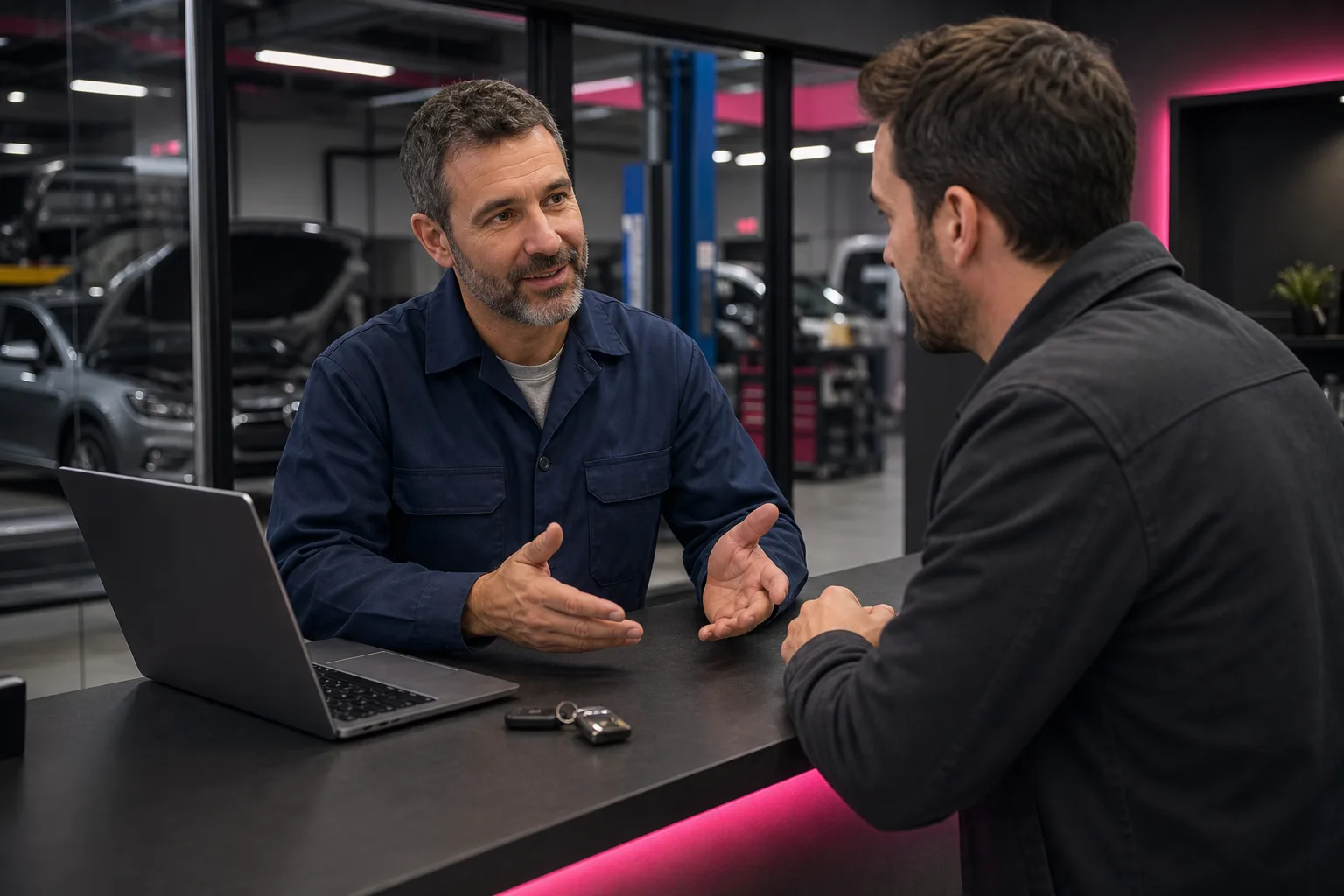
This philosophy extends to communication. Your master speaks in plain language about findings and options — no pressure to approve work you do not understand, no vague estimates that balloon once the vehicle is on the lift. Transparency is part of accountability; you cannot stand behind work you cannot explain.

Master technician explaining completed repair details to a vehicle owner at the workshop counter, 1200x800

How a job moves through our workshop

Every repair follows the same accountable framework — designed so you always know who is responsible and what stage your vehicle is in.

A

Assignment at intake

When you arrive, a master is introduced as your primary contact before the vehicle leaves the parking area. They conduct the initial walkaround, record mileage and concern details, and enter everything into a job file that stays with them — not a generic queue shared by the floor. If you return for future service, we prioritize reuniting you with the same master when schedules allow.

B

Diagnosis with documented reasoning

Your master performs or directly supervises all diagnostic steps relevant to the concern. Findings include measured values where applicable — idle RPM stability, brake pressure distribution readings, drivetrain play measurements — so approvals are based on evidence rather than assumptions. If additional issues surface, you hear from the same person who opened the hood, with photos attached when helpful.

C

Repair, verification, and signature

After work is complete, your master runs verification procedures specific to the repair type — road test for noise concerns, pressure test for AC lines, scan tool confirmation for electronic systems. The completion certificate lists parts installed, fluid types, torque-critical items, and test results. Their signature appears at the bottom. At pickup, they walk you through the document and answer remaining questions face to face.

Standards our masters are held to

Personal accountability does not mean informal work. Every technician at xenolithoid meets rigorous internal benchmarks before signing a certificate with their name on it.

Verified certifications

Masters maintain current ASE credentials and manufacturer-specific certifications relevant to their specialty areas — engine performance, drivetrain, climate control, and brake electronics. Continuing education through the Rocky Mountain Automotive Training Consortium is required annually, not optional.

Peer review on complex jobs

When a repair crosses specialty boundaries — such as an idle control issue affecting brake system load calculations — a second master reviews the diagnostic path before final approval. The primary technician remains accountable, but two sets of experienced eyes reduce the risk of overlooked interactions between systems.

Traceable parts sourcing

Components installed on your vehicle are logged with supplier references and part numbers on the completion certificate. We favor OEM and premium aftermarket suppliers vetted through the National Workshop Data Alliance network, and we retain records so warranty questions can be answered without guesswork.

Warranty terms stated upfront

Labor and parts warranty coverage is written on the signed completion document before you leave — duration, scope, and conditions spelled out in plain language. If a covered concern arises, you contact the master who performed the original work directly rather than navigating a call center.

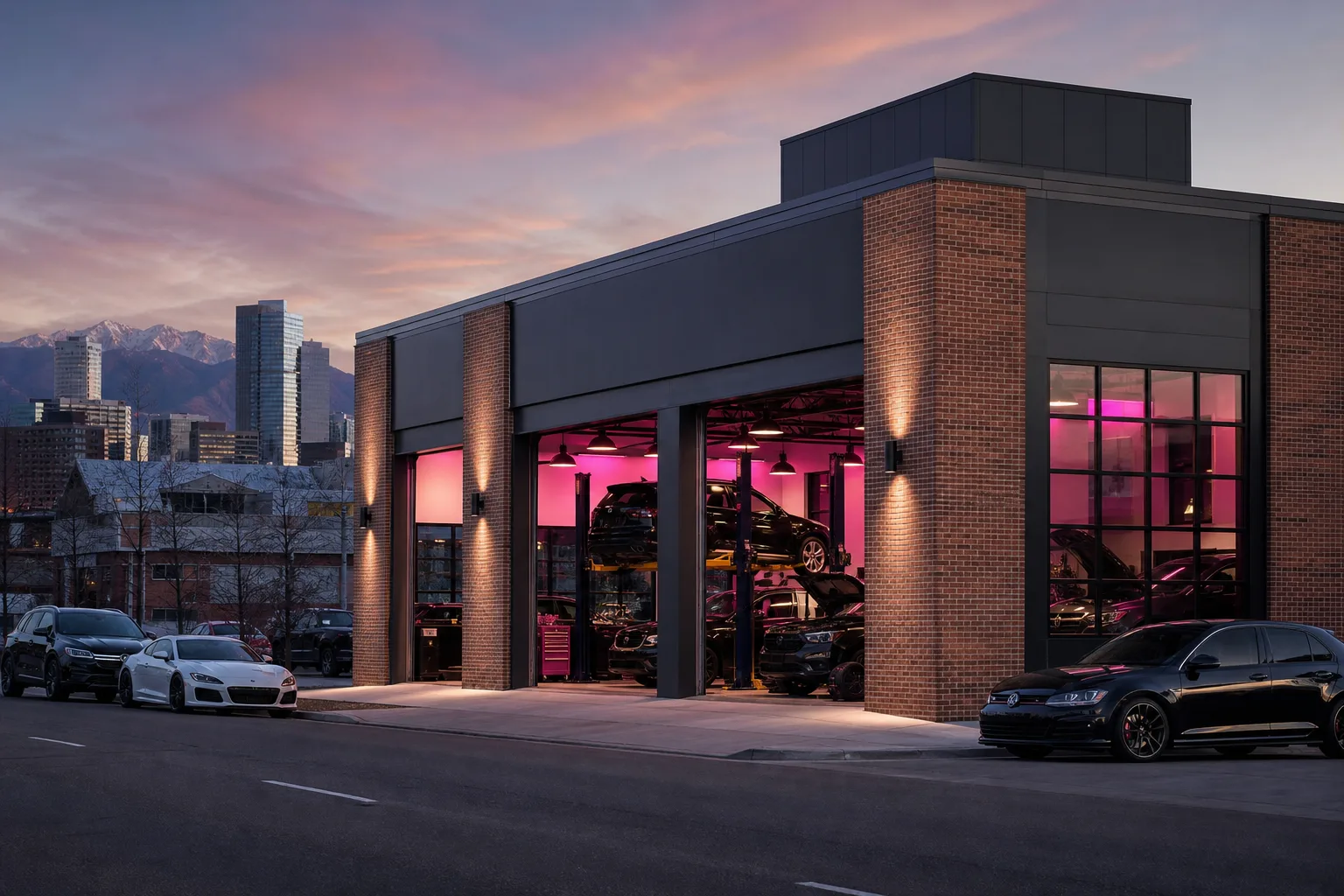
Exterior view of the xenolithoid automotive workshop on Lawrence Street in Denver, 1200x800

Our Denver home on Lawrence Street

The xenolithoid workshop occupies a purpose-renovated bay facility at 2531 Lawrence Street — designed for long-form diagnostic work rather than express-lane turnover. Each master maintains a dedicated lift assignment, personal tool storage, and direct access to scan equipment calibrated on a fixed schedule. The layout keeps vehicles stationary during multi-step repairs so nothing is rushed to free a bay for the next ticket.

We serve daily commuters, family vehicles, and small commercial fleets throughout the Denver metro area. Our 24-hour availability reflects the reality that breakdowns and concerns do not follow business hours — owners can reach us for intake scheduling, status updates, and pickup coordination at any time.

Community partnerships with local driving schools and fleet operators provide structured maintenance programs built on the same master-assignment model. Whether you visit once for a specific concern or return for ongoing care, the goal remains unchanged: one accountable specialist who treats your vehicle with the attention it deserves.

Talk to us about your vehicle

Whether you need a first-time intake inspection or want to request a specific master for returning service, our team is ready to outline scope, timing, and next steps before any work begins.

Contact us

Explore our technical articles

Our masters publish in-depth guides on idle control systems, brake distribution electronics, drivetrain diagnostics, and more — written for owners who want to understand what happens during professional service.

Important information

xenolithoid provides knowledge about automotive repair and maintenance services. The information on this website is intended to help vehicle owners understand available workshop options, general service practices, and common repair considerations. Website content does not replace a professional in-person inspection of your specific vehicle.

Service recommendations, diagnostic findings, repair timelines, and parts availability may vary depending on vehicle make, model, production year, mileage, prior maintenance history, and driving conditions. Any repair or maintenance decision should be made after consultation with a qualified automotive technician following a thorough physical evaluation.

xenolithoid provides consultation and automotive repair services in accordance with applicable local regulations. We do not guarantee identical outcomes for every repair, as results depend on component wear, environmental factors, and usage patterns. Previous service results on other vehicles do not guarantee the same outcome for future work on your car.

By using this website and submitting inquiries through our contact forms, you acknowledge that general website content relates to our services and educational materials. For vehicle-specific guidance, schedule a direct consultation with our team or visit our workshop location in Denver, Colorado.