When idle air control valves fail: symptoms, testing, and replacement scope
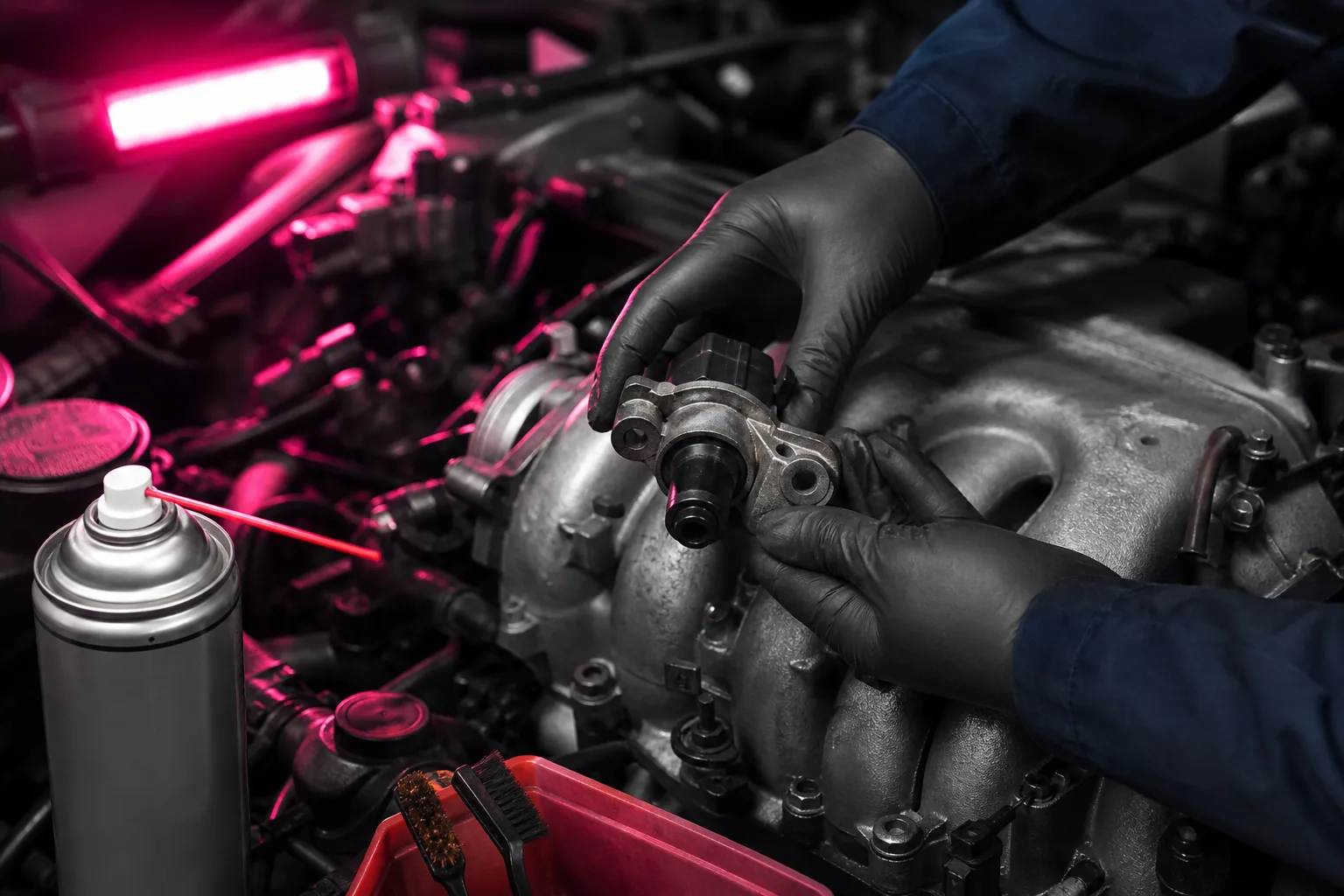
The idle air control valve regulates bypass airflow around the closed throttle plate so the engine maintains a stable RPM at rest. When carbon deposits or internal wear prevent the pintle from moving freely, idle quality deteriorates — often before any check-engine light appears. Recognizing early symptoms saves owners from misdiagnosing fuel or ignition problems that do not address the root cause.
How the IAC valve maintains idle stability
At idle, the throttle plate is nearly closed. The engine control module commands the IAC valve to open a precise passage, allowing enough air to enter the intake manifold for combustion without driver throttle input. The module adjusts pintle position continuously based on engine temperature, electrical load from accessories, and transmission gear selection.
On many vehicles the IAC valve sits on or near the throttle body, exposed to hot crankcase vapors and oil mist. Over years of operation, varnish and carbon accumulate on the pintle and seat. A valve that once responded in milliseconds may lag or stick, producing the hunting idle drivers notice at stoplights.
Symptoms that point toward IAC failure
IAC-related problems typically appear under low-load conditions. Common indicators include:
- RPM surging between roughly 600 and 1200 after a cold start
- Stalling when coming to a stop or when the air conditioning clutch engages
- Idle speed that remains too high until the engine fully warms
- Rough idle that smooths out above 1500 RPM
- Stored idle control or idle speed codes on scan tools
Symptoms may be intermittent because a partially stuck pintle can still move under certain temperature or voltage conditions. That inconsistency often leads owners to replace spark plugs or fuel filters first — reasonable maintenance, but not always the fix when bypass airflow is the issue.
Live data checks before removing the valve
Diagnosis starts with reviewing idle-related data streams. Technicians monitor commanded versus actual idle speed, IAC step counts or percentage values, and short-term fuel trim at idle. If the module commands maximum IAC opening yet idle remains low, either the valve is stuck closed or a vacuum leak upstream is stealing airflow.
A controlled idle relearn procedure — when supported by the vehicle — helps determine whether the module can establish a baseline after clearing adaptive values. If idle stabilizes briefly then deteriorates again, mechanical sticking inside the valve is likely.
Electrical testing confirms the module can drive the valve. Resistance and actuation checks across the connector eliminate wiring faults before the valve is condemned. Skipping this step risks replacing a valve when the problem is a corroded ground or damaged harness pin.
Cleaning versus replacement: making the responsible choice
Light carbon on an otherwise functional valve may respond to careful cleaning with appropriate throttle-body-safe products. The pintle must move through its full range without binding after cleaning. If the motor draws excessive current or the pintle wobbles on its shaft, cleaning is a temporary measure at best.
Replacement is warranted when internal motor failure, worn pintle seals, or repeated sticking after cleaning is documented. Using a quality replacement matched to the application — not a universal fit — preserves idle relearn accuracy and long-term reliability.
After any IAC service, a proper idle relearn and road test under accessory load confirm the repair. At xenolithoid, the assigned master signs the work order only after idle stability is verified across cold and warm operating conditions.
Extending IAC valve lifespan
Regular intake system maintenance reduces carbon migration toward the valve. Addressing PCV system faults, using manufacturer-recommended fuel, and resolving rich-running conditions early all limit deposit formation.
If idle quality changes gradually over months, schedule an inspection before stalling creates a safety concern in traffic. Early intervention often limits repair scope to cleaning rather than full replacement.